Sale day is controlled chaos.
Multiple lanes running. Buyers walking the lot. Vehicles moving constantly. Teams working against the clock to get every VIN on spot. For independent auctions running hundreds—or thousands—of units per week, it’s a familiar rhythm.
But even in well-run operations, one challenge persists: you don’t always know early enough if every vehicle is where it needs to be. And when that uncertainty shows up late, it turns into lost opportunity — and lost revenue.
The Auction Black Hole Is Real
Every auction operator has seen it: a vehicle is on the run list, expected in the lane, and doesn’t arrive — because it wasn’t where it needed to be at the right moment.
When that happens, teams have a narrow window to recover. Sometimes they can, but often, they can’t.
The dropout is lost revenue for that sale. Across a high-volume operation, even a small number of these adds up quickly. And in most cases, the root cause isn’t a major breakdown, it’s a visibility gap.
Vehicles move constantly between check-in, recon, storage, and staging — often across large footprints or multiple yards. When something falls out of place, it’s not always obvious until it matters. And as operations scale, that gap widens, especially when inventory is spread across multiple lots, vendors, and off-site storage locations without a single, real-time view.
The Real Problem: Finding What’s Missing — Quickly
Auction teams work to ensure every vehicle is ready for sale, but at scale, they can’t manually verify every unit. When a VIN isn’t on spot, the search process becomes manual. Calls are made. Search parties attempt to locate the vehicle. Time is spent narrowing down its location.
At smaller sites, that’s manageable.
But for companies with larger footprints, higher volumes, or multiple locations, it becomes time-consuming, and sometimes impossible.
The breakdown isn’t in knowing what should be ready—it’s in quickly identifying what’s not ready and getting it back on track. This is fundamentally a yard management challenge, one where teams are operating with incomplete or outdated information about where vehicles actually are.
A More Direct Way to Operate
The solution is straightforward: know where every vehicle is 24/7/365. Using real-time location, you can eliminate time-consuming yard audits and wasted time searching for vehicles.
You’re more prepared, and more profitable.
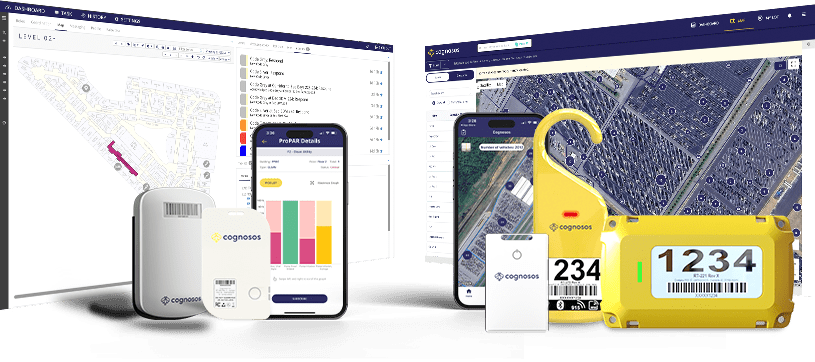
Cognosos’ real time location solution uses a network of wireless sensors and vehicle-based tags to provide a continuous, real-time view of where every VIN is—across the lot and across off-site locations. Location updates happen automatically, without relying on manual scans, audits or manual updates.
For operations teams, that translates into a clear, actionable view.
At any point leading up to sale, automated alerts show you where key vehicles are so you can see exactly which ones are not on spot. Not in a general sense, but specific VINs, with precise locations: a unit still in recon, one staged in the wrong lane, another sitting at an off-site yard.
From there, the response is simple: assign drivers, retrieve the vehicles, and keep the sale on track.
Instead of reacting to issues at the last minute, teams can proactively manage exceptions before they impact the sale.
Impact Beyond the Lane
While sale day is where the impact is most visible, the financial upside of real-time visibility extends well beyond the sales lanes. It doesn’t just help auctions find cars—it improves how the entire operation runs.
With better visibility, auctions can:
- Stop wasting time searching for vehicles. Keep recon, mechanical, and detail teams productive instead of waiting on missing units.
- Reduce unnecessary moves. Identify and eliminate wasteful vehicle movement that slows down operations and adds labor.
- Plan labor more effectively. Make informed staffing decisions and handle higher volumes without adding headcount.
- Identify bottlenecks and process breakdowns. See where vehicles dwell too long and take action to keep inventory moving.
- Lower risk and associated costs. Better tracking supports theft detection, reduces damage, and can help lower insurance exposure.
- Improve Overall Customer Experience. Allow custom access for fleet and other important buyers. Transporters are able to find vehicles without help from staff.
- Retain Employees. When you eliminate the frustration of hunting for missing VINs, your team stays focused on high-value work, reducing burnout and turnover in the process.
The result is a more efficient operation across the board: fewer wasted moves, better use of labor, and more vehicles ready for sale—on time.
From Uncertainty to Control
When auctions don’t have a real-time view of every vehicle, they’re forced to rely on process, experience, and manual effort to keep things moving. Most of the time, that works. But when it doesn’t, the gaps show up on sale day in the form of missed units and time spent tracking down issues that should have been caught earlier.
Real-time visibility shines a light into the auction black hole.
Beyond 24/7 precise location, it exposes inefficiencies that are otherwise hard to see: unnecessary moves, bottlenecks between steps, idle inventory, and time lost searching for vehicles. Real time location gives auctions a clearer picture of how work is actually happening on the lot and where it can be improved.
The auctions that solve for the black hole don’t just recover missing vehicles. They run tighter, more efficient operations from gate to lane. Learn more about how real time location can help you ensure vehicles are in the right place at the right time every step of the process.