Rail damage isn’t difficult to find. It’s difficult to prove.
By the time a damaged VIN is discovered at a distribution center, the event that caused it may have occurred days earlier and hundreds of miles away. The vehicle may have moved through multiple rail yards, interchange points and custody transfers. Everyone involved has theories. Few have evidence.
That’s why rail damage remains one of the most persistent challenges in finished vehicle r. Not because OEMs don’t know it’s happening, but because they often lack an independent means to determine exactly where it occurred, how severe it was, and who had custody at the time of impact.
The result is a familiar cycle of claims investigations, arbitration and disputes over responsibility—along with repair costs, delivery delays and operational inefficiencies that accompany every unresolved damage event.
The problem is clear, but the event itself often remains invisible.
The Visibility Gap
The issue is not a lack of process. Damage is documented. Claims are opened. Custody is reviewed. Loading and securement procedures are examined.
The gap is the missing event record.
Without independent impact data, teams are left reconstructing what happened after the fact. That can put shipping teams, rail partners and yard operators into the same familiar loop: reviewing custody, debating responsibility and trying to determine whether the root cause was tied to a specific yard operation, interchange point, route segment or handling event.
That process may help resolve an individual claim, but it doesn’t necessarily prevent the next one.
That is where the opportunity lies. The value of better rail damage visibility is not simply proving responsibility after damage occurs. It is identifying the operational patterns that allow OEMs to reduce damage before it happens again.
Why the Cost Keeps Growing
Rail remains central to finished vehicle logistics because there is no practical alternative for moving vehicles at scale. But the economics surrounding rail damage are becoming harder to absorb.
Vehicle weights continue to increase, EV volumes continue to grow, repair costs continue to rise, and delivery timelines are under pressure. In some cases, OEMs may reduce vehicle density within autoracks to help mitigate damage risk, increasing the effective transportation cost per vehicle.
These factors compound the impact of every damage event. A damaged vehicle is not just a repair order. It triggers claims activity, delivery delays and investigation efforts that consume time without necessarily helping prevent the next occurrence.
The financial consequences are increasing. The ability to isolate and correct the underlying cause has not kept pace.
From Damage Reports to Impact Intelligence
Most OEMs already have established processes for documenting damage once it is discovered. That is not the problem.
What they need is impact intelligence they can act on:
- Impact severity
- Timestamped event data
- GPS location
- Route, yard or interchange context
- Repeat patterns across lanes or handling points
The objective is not simply better claims management. It is prevention.
If severe impacts are consistently occurring at a particular location or during a specific handling process, the conversation with rail partners changes. It becomes less about debating a single claim and more about correcting the condition that is creating repeated risk. That can support route adjustments, carrier discussions, process changes and performance measurement over time.
Why Accuracy Matters
Systems already exist that attempt to determine the source of vehicle damage. But the presence of impact data does not automatically mean the data tells the full story.
Placement matters.
If a sensor is positioned where the vehicle’s own systems absorb or dampen shock, the reading may understate the force experienced during transit. In that case, the system may appear to be collecting useful data while actually masking the severity of the event.
That distinction matters. If the data is softened before it is captured, it can lead teams to the wrong conclusions about where damage occurred, how severe the impact was or whether a particular route or handling point is creating recurring risk.
The issue is not whether a system can register an impact. The issue is whether it captures that impact accurately enough to support operational decisions.
Turning Rail Damage into an Operational Improvement Opportunity
Accurate, real-time impact data reduces reliance on post-delivery inspections and claims investigations to determine what happened. Instead, OEMs can use timestamped shock and location data to identify the events and patterns that create damage in the first place.
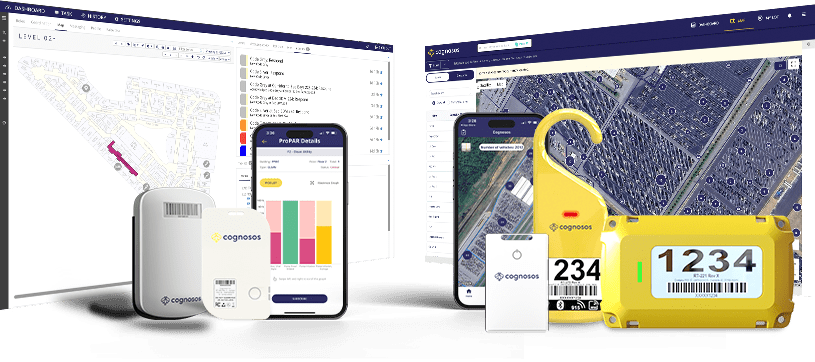
Getting trustworthy data begins with where impacts are measured. Cognosos’ tracking system measures impacts from an unsprung component of the vehicle. That location allows the sensor to measure forces closer to what the vehicle actually experiences during transport rather than relying on readings that may be dampened by the vehicle’s suspension.
The Cognosos combination of impact severity, timestamp and GPS location offers visibility into the specific routes, yards, interchange points and handling events that create damage risk across the rail network.
With that information, OEMs can identify recurring problem locations, engage rail partners with objective data and measure whether corrective actions reduce future damage. Claims may still be part of the process, but they are no longer the only measure of value.
The ROI of Accurate Impact Data
Accurate impact intelligence transforms damage reporting into a tool for accountability, prevention and measurable ROI. When recurring impact events can be tied to specific routes or handling practices, OEMs gain the information needed to address the source of the problem.
Beyond direct damage reduction, impact visibility can help OEMs:
- Increase rail utilization by identifying opportunities to safely maximize autorack capacity rather than under-loading due to historical damage concerns.
- Identify impact hotspots and work with rail partners to address problematic routes, yards or handling practices before they create recurring damage.
- Track performance trends over time, providing objective data to measure the effectiveness of corrective actions and operational improvements.
- Evaluate carrier performance with consistent impact data that can support routing decisions, carrier discussions and long-term transportation planning.
Rail damage may never disappear entirely. But by connecting data on impact severity, location and timing to specific patterns across the rail network, rail damage becomes a problem that can finally be measured, managed and reduced. Want to learn more? Get in touch.