If your facility runs Bosch Security Escort, you already know the clock is ticking toward December 2026. That’s when the platform officially reaches end-of-life, and for behavioral health facilities and other high-risk healthcare environments, it means that finding a replacement isn’t optional, and it isn’t something you want to rush into at the last minute.
But here’s the thing: you might think the most streamlined solution is a straight swap. Find something that does what Bosch did, get it installed, and move on. That approach will almost certainly land you in the same place five years from now — locked into aging hardware, buried under maintenance obligations, and wondering why your “modern” system still can’t tell you where a staff member actually is during an active threat.
This deadline is your opportunity to actually rethink the standard you’re holding your safety infrastructure to.
The Real Problem with “Just Replacing” Bosch Security Escort System
The most common alternatives to legacy duress systems follow the same playbook: a dense grid of battery-operated sensors mounted in every room, bay, and hallway. On paper, it achieves room-level accuracy. In practice, it creates a logistical burden that never goes away.
Think about what that actually means for your facilities team. Hundreds — sometimes thousands — of devices to mount, test, and track. A replacement cycle that kicks in every few years as batteries die across your entire floor plan. Every new wing or renovation triggering another wave of installation. It’s not a safety upgrade. It’s a different kind of headache in a different kind of box.
For behavioral health facilities specifically, the stakes are higher. Your staff work in environments where a tense situation can escalate without warning. The last thing you need is a safety system that adds operational drag instead of removing it.
What a Modern Staff Safety Platform Actually Looks Like
Before you evaluate any replacement, it’s worth defining what you’re actually looking for. A true incident management system — not just a duress button with a location tag — should meet a few non-negotiable criteria.
Coverage shouldn’t stop at your front door. Your staff don’t clock out of risk the moment they leave the building. Any system worth deploying needs to extend to parking decks, outdoor walkways, stairwells, and transition spaces — the areas where staff are often most isolated.
Location data needs to be viewed dynamically. Knowing where a button was pressed is useful for approximately the first thirty seconds. A real incident management system tracks where someone is continuously, as a situation evolves. If a staff member is moved or flees, security needs to be able to follow in real time.
Activation must be discreet. In behavioral health environments especially, visibly reaching for a device can escalate a situation before help has any chance of arriving. Silent, tactile activation isn’t a nice-to-have, it’s a clinical safety requirement.
Response should be coordinated, and quick. Security dispatch isn’t instant, especially in large buildings, and is just one piece of response. Peer-responders on the same floor who receive alerts can mobilize immediately, offering assistance in the seconds before centralized security arrives. The right system allows teams to move together automatically, not depend on someone manually connecting the dots under pressure.
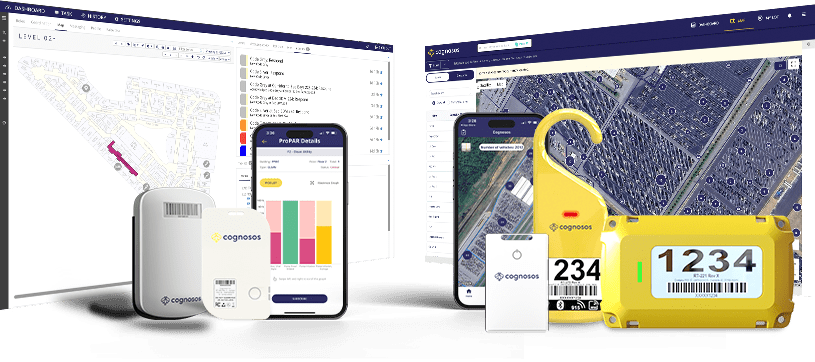
Cognosos was designed around exactly these requirements. The platform uses a dedicated low-latency wireless network — independent of hospital Wi-Fi — and a lightweight wearable badge with squeeze-to-activate functionality that checks every one of those boxes. What sets it apart from most alternatives is what it doesn’t require: a dense grid of battery-operated sensors mounted across your entire footprint, with all the installation cost and ongoing maintenance that comes with it.
This Moment Doesn’t Come Around Often
Healthcare organizations don’t typically get a clean window to rethink their safety infrastructure. A vendor sunset is one of the rare occasions where the decision is already made for you — you have to change something. The question is whether you change it strategically or just reactively.
Replacing Bosch with another legacy-style system means disruptive and costly installation, years of maintenance overhead, and still not having the incident management capability your staff deserves. Replacing it with Cognosos means walking away from all of that with a platform that’s actually built for how threats unfold in real environments.
December 2026 isn’t that far away. If you’re ready to see what a modern replacement looks like, book a demo and we’ll walk you through it.