How to Bid (and Win) Rural Health Transformation Program Funds
Rural healthcare has never faced a more critical moment — or a more significant opportunity.
In response to sweeping Medicaid cuts, the federal government established the Rural Health Transformation Program (RHTP), a landmark funding initiative that makes up to $50 billion available over the next five years — $10 billion annually — to help rural health communities modernize, sustain, and grow. For rural hospitals and health systems that have long operated with constrained budgets and limited access to the technology that larger academic centers take for granted, this represents a genuine turning point.
But funding at this scale comes with competition. A well-intentioned application is not the same as a winning one. In a recent webinar, government procurement specialist Shelly Spoeth and Cognosos Director Jeff Clarke broke down exactly what it takes to submit a proposal that rises to the top. Here’s what they shared or you can watch the full webinar on-demand.

Understanding What the RHTP Is Looking For
The RHTP is federally funded but state-administered, meaning each state sets its own specific guidelines for how grants are allocated. That makes it essential for applicants to read their state’s requirements carefully — not just skim them.
Grant reviewers are human beings working through a checklist. Your job is to make their job easy: demonstrate clearly that you meet every evaluation criterion, and build your entire narrative around proving it.
The Five Components of a Winning Bid
Shelly Spoeth has spent decades on both sides of the procurement process — writing bids and evaluating them. In her experience, the strongest applications share five characteristics:
- Meeting the Application Criteria Before you write a single sentence, confirm that your organization actually qualifies. If there’s a gap, consider whether a partner organization could fill it. A strong partnership can transform an incomplete application into a competitive one.
- Demonstrating Cost-Effectiveness Reviewers want to know that grant dollars will create measurable change. Where is your organization losing money today? How will this funding stop that bleeding, and what will the financial picture look like on the other side?
- Showing Metrics Numbers matter. Show reviewers what you can count, what you currently measure, and what you plan to measure once the program is in place. A simple dashboard or table can be more persuasive than paragraphs of description — it signals that you are committed to accountability.
- Addressing an Unmet Need Every rural healthcare organization faces challenges that go unresolved because of resource constraints. Name yours directly. Show reviewers that the funding you’re requesting maps precisely to a real, documented problem in your community.
- Telling a Story This is the element that separates adequate applications from memorable ones. Open with a patient story — a real situation that happens in your facility — and carry it through the entire proposal. Let reviewers see how each part of your solution affects an actual person’s life.
Six Steps to Writing the Proposal
A great idea, poorly executed, rarely wins. Shelly outlined a disciplined process that her teams have used successfully across dozens of bids:
- Read the application at least twice. The first time, read it without marking anything — just absorb it. The second time, take notes. Involve a trusted colleague for a third read-through, then compare observations.
- Appoint a dedicated proposal manager. This person owns the bid. They make final decisions, set internal deadlines, and ensure nothing falls through the cracks. Grant-writing by committee without a clear leader is a recipe for a disorganized submission.
- Plan backward from the deadline. Consider submitting 24 hours before the stated deadline, then build your entire internal timeline from that earlier date. Account for review cycles, financial sign-offs, and a final “pens down” date after which no substantive changes are made.
- Solution before you write. Get every contributor aligned on the approach before anyone starts drafting. Disconnected sections written by people with different assumptions are obvious to reviewers — and difficult to patch.
- Engage your financial team early. Budget accuracy is non-negotiable. Every detail in the narrative needs a financial counterpart. Your proposal manager and finance team should be in close, ongoing communication throughout the process.
- Build in multiple review cycles. Plan for at least two: a “green team” review when the draft is rough but complete, and a “red team” review for final polish. The last stage — what Shelly calls the “white glove” review — is a final check that every evaluation criterion has been explicitly addressed.
How Technology Supports the RHTP’s Strategic Goals
One of the RHTP’s core requirements is sustainability: after grant funding ends, applicants must demonstrate a plan to continue paying for whatever they’ve built. That’s why choosing the right technology partner matters.
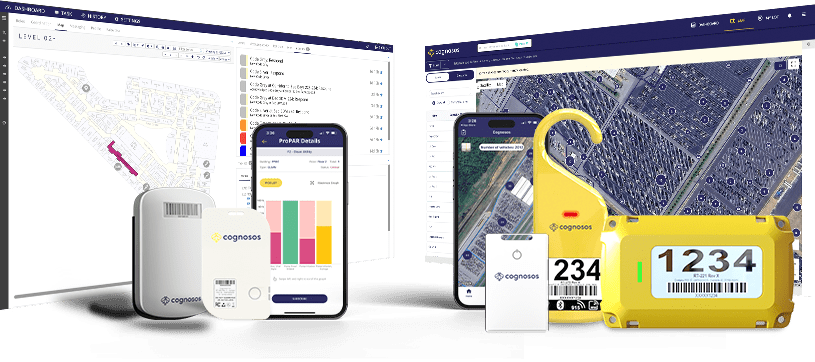
Cognosos offers a real-time location systems (RTLS) platform that rural health systems can use to generate the kind of operational savings that make long-term sustainability credible. The platform supports the RHTP’s strategic pillars in four concrete ways:
Asset Management: Equipping mobile medical equipment with tracking devices eliminates time spent searching for misplaced items, reduces equipment shrinkage, and enables smarter capacity planning. The savings from reduced equipment loss and better utilization can be documented and reported directly to grant administrators.
Environmental Monitoring: Automated, 24/7 temperature and humidity monitoring replaces manual logging with a reliable, audit-ready system. This protects the value of vaccines and other temperature-sensitive supplies while ensuring continuous regulatory compliance — without adding staff burden.
Hand Hygiene Compliance: Hospital-acquired infections (HAIs) represent a significant and often preventable revenue loss. An RTLS-enabled hand hygiene monitoring system allows administrators to track compliance by shift, role, or unit — identifying where additional training is needed before infections occur.
Staff Safety and Duress: Staff retention is one of the most pressing operational challenges in rural healthcare. When employees don’t feel safe, they leave — and replacing them is expensive. A wearable panic button system gives staff a fast, direct way to summon help, improving both safety outcomes and workplace culture.
Each of these use cases maps to a measurable metric that can be tracked over time, reported to grant reviewers, and used to demonstrate the ongoing value of the program long after initial funding expires.
Start Now — Before the Deadline Arrives
Grant windows for programs of this scale open and close quickly. The organizations that win are almost always the ones that started preparing before the application was officially released.
If your rural health system is exploring RHTP funding, the time to engage is now — to understand your eligibility, document your current operational baselines, identify the right technology partners, and build your narrative before the clock is running.
Reach out to Cognosos to learn how RTLS technology can support your grant application and help you build a compelling, metrics-driven case for funding.