Picture the meeting.
Purchasing calls you in. On the screen is a dashboard showing that their racks average 62 days of dwell at your site, against a contracted loop of 20. They have timestamps. They have location history. They have a chargeback figure.
You have a clipboard count from March.
Who wins that conversation?
Why OEMs are instrumenting dunnage right now
For decades, returnable packaging was treated as an operational afterthought, tracked loosely if at all. That era is ending, and it’s worth understanding why, because the reasons have nothing to do with you and everything to do with what’s happening inside the OEM.
Racks and returnable containers are being reclassified in OEM thinking from packaging to capital assets. When a new vehicle program launches, dunnage capital requests can run into the tens of millions, and finance teams have started asking why the existing fleet can’t cover it. The honest answer is usually that nobody knows where the existing fleet is.
At the same time, OEMs are pouring money into AI: predictive routing, supply chain models, shop-floor copilots. Those models are only as good as the physical data feeding them, and delayed ASNs and manual yard audits don’t cut it. So OEMs are deploying hardware-verified tracking to establish ground truth about where their assets physically are.
And the first place they’re pointing it? The biggest blind spot in their network: supplier yards. Yours.
What data asymmetry costs you
When one side of a commercial relationship has continuous location data and the other has a spreadsheet, every ambiguous situation resolves in favor of the side with the data. Not because they’re right, but because they can produce evidence and you can’t.
In practice, that looks like:
- Chargebacks you can’t contest. The OEM’s system says 400 of their racks are at your site. Maybe it’s true. Maybe 60 of them left three weeks ago. Without your own record, you’re negotiating against a dashboard with a memory.
- Non-compliance reports that stick. When specified packaging isn’t available and parts ship in cardboard, the report lands on you, whether or not the racks failed to come back through any fault of yours.
- Blame for other people’s mistakes. Racks returned to the wrong OEM dock, batched incorrectly at a mixing center, or parked in the OEM’s own overflow lot all read, from their side, as racks you’re holding. Someone else’s routing error becomes your invoice.
- The reputational tax. None of these disputes are individually fatal. But a pattern of them earns you a label: difficult supplier, poor packaging discipline. That label follows you into the next program bid, where it costs far more than any chargeback.
The OEM’s data isn’t always right
This is the part worth sitting with. OEM tracking data will be treated as authoritative because it’s hardware-verified. But their tags stop reporting precisely where their visibility ends and yours should begin, and plenty of rack-loop failures happen in exactly those seams: misrouted returns, OEM-side dwell, carrier detours.
When their data is wrong in your favor, nobody is coming to tell you. The only way those cases ever surface is if you have your own record. Independent ground truth isn’t just defense against their accurate claims. It’s the only mechanism for catching their inaccurate ones.
Level the table
The answer isn’t a bigger annual audit or a stronger-worded contract clause. It’s owning the same class of data they own.
That used to mean infrastructure projects and scanning discipline, which is why suppliers never did it. It doesn’t anymore. One tracker per rack, no fixed infrastructure, no barcode scans, no workflow change, and you see actual movement across your plants, your carriers, and their docks. The same fidelity they have. Owned by you.
Then the meeting goes differently. They show 62 days of dwell. You show the 60 racks that left on the 14th, the return that got misrouted to their Kentucky dock, and the three weeks their own overflow lot added to the loop. That’s not a supplier taking heat. That’s two parties reconciling data as equals.
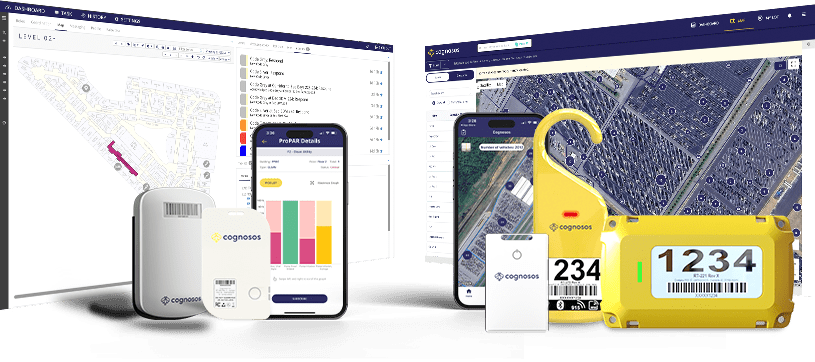
The fastest way to get there is to measure one rack. The Cognosos Rack Tracking Pilot puts a cellular tracker on a real rack or shipment for 30 days and shows you its actual movement against what your systems say. One device. No rollout. Your own numbers, before someone else’s numbers get quoted at you.
Cognosos tracks returnable containers and racks across plants, yards, and OEM handoffs with no infrastructure and no scanning. Learn more about returnable container tracking.